When a Long URL Becomes a Problem: Create Better Short Links
A long URL isn't necessarily a bad URL. Sometimes it's exactly what a website needs to identify a product, article, category, campaign, or specific page. The trouble starts when that same URL has to leave the website and enter the real world.
- A Long URL Can Be Fine Until Someone Has to Use It
- Five Moments When a Short Link Actually Makes Sense
- Don't Shorten a Link Until You've Checked Where It Goes
- Short Doesn't Always Mean Better
- What Should You Check Before Sharing?
- A Short Link Should Remove Friction, Not Add It
- Creating a Short Link Doesn't Have to Be Complicated
- The Best Short Link Is the One People Can Actually Use
Think about dropping a massive link into a text message, putting one on a printed flyer, sharing it during a presentation, or asking someone to type it from a piece of paper. Suddenly, a perfectly functional URL becomes a small usability problem. It's difficult to read, easy to mistype, and not particularly memorable.
That's where short links earn their keep. The goal isn't to make every URL tiny. It's to make the links people actually interact with easier to handle.
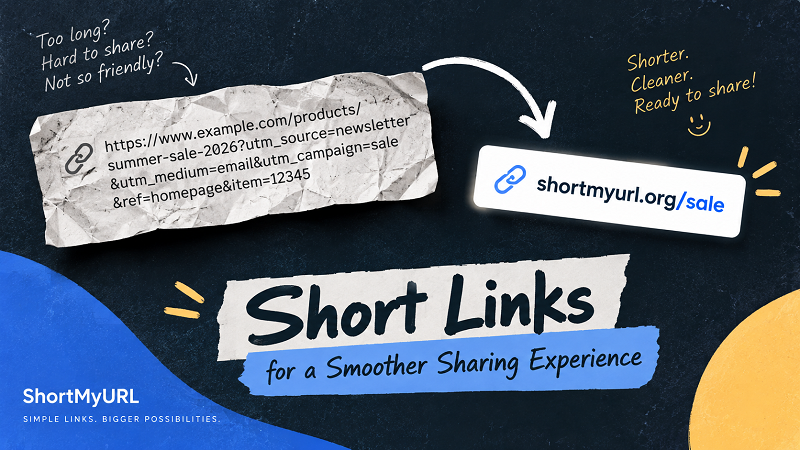
A Long URL Can Be Fine Until Someone Has to Use It
On a website, nobody cares much about the length of a URL when they click a button. The browser handles it. But outside the website, things change.
A URL containing a long product path, multiple folders, tracking parameters, session information, or campaign tags can quickly turn into something like a paragraph of random characters. Sharing it in a messaging app may cause awkward line breaks. Adding it to a poster can make the design look cluttered. Asking somebody to type it manually? That's where things get painful.
There's also the simple human factor. People are much more comfortable with a link they can glance at and understand than one that looks like a string of computer code.
A short link doesn't magically improve the destination page. It simply creates a cleaner doorway to it.
Five Moments When a Short Link Actually Makes Sense
Not every link needs shortening. In fact, shortening URLs indiscriminately can create unnecessary work. But there are several situations where the difference is immediately noticeable.
- Sharing links in messages is one of the obvious ones. A short URL takes up less visual space and makes a conversation easier to scan. This matters even more when you're sharing several links at once.
- Printed materials are another strong use case. A URL on a flyer, business card, menu, package, or event poster needs to be readable from a distance and, sometimes, easy enough to type into a phone. A compact link gives the designer more room and gives the reader less frustration.
- Social media posts can benefit too. While many platforms automatically turn URLs into clickable links, a shorter address can make a post look cleaner and leave more room for the actual message.
Then there are campaign links. Marketing URLs often contain tracking parameters that are useful behind the scenes but ugly when displayed to customers. Keeping those parameters in the destination while presenting a shorter public-facing link can make the campaign easier to share.
Finally, there are links people simply need to remember or communicate verbally. Try reading a 150-character URL to someone over the phone. It's not impossible. It's just a spectacularly inefficient way to spend thirty seconds.
Don't Shorten a Link Until You've Checked Where It Goes
Here's a mistake that's surprisingly easy to make: shortening a URL before checking the original.
A short link is only as useful as its destination. If the original URL is broken, outdated, inaccessible, or pointing to the wrong page, shortening it doesn't solve anything. It just gives you a shorter version of the same problem.
Before generating a short link, open the original URL yourself. Check that the intended page loads correctly and that it works on a phone as well as a desktop browser. If the URL contains campaign parameters or other information required by your analytics setup, make sure those details aren't accidentally removed.
It's also worth checking whether the destination requires someone to be logged in. A link might work perfectly for you because you're already signed into an account while failing completely for someone receiving it for the first time.
A good rule is simple: verify the destination first, shorten it second.
Short Doesn't Always Mean Better
There's a temptation to make a short link as tiny as technically possible. That's not necessarily the best approach.
Compare these two examples:
shortmyurl.org/a8K2xQ
and
shortmyurl.org/summer-sale
The first is compact and perfectly functional. The second gives the reader an immediate clue about where the link is supposed to lead.
That distinction matters when links are shared in public. A completely random string can look suspicious, particularly when people have become increasingly cautious about clicking unfamiliar links. A recognizable alias can provide a little more context.
This doesn't mean every link needs a clever custom name. For a private share between two people, a random short code may be perfectly adequate. For a campaign, event, promotion, or public-facing resource, a readable alias can be much more useful.
The best short link isn't necessarily the shortest one. It's the one that fits the situation.
What Should You Check Before Sharing?
Once you've generated the link, don't immediately paste it everywhere. Give it a quick test.
Open the shortened URL and confirm that it reaches the expected page. Try it from a private browsing window if the destination involves accounts or permissions. Check it on mobile, especially if the link will be used primarily by smartphone users.
If you're using tracking parameters, test those as well. A link that reaches the correct page but quietly breaks your campaign attribution isn't doing you any favors.
And keep the original URL somewhere accessible. Shortening a link shouldn't mean losing track of the destination behind it.
These checks take less than a minute and can prevent the classic scenario of discovering a broken campaign link after hundreds of people have already received it.
A Short Link Should Remove Friction, Not Add It
There's a bigger point here that often gets lost in conversations about URL shortening.
A short link isn't valuable simply because it contains fewer characters. Its real value comes from removing friction between the person sharing the link and the person using it.
If a link is going into a printed advertisement, shorter is usually more practical. If it's being shared in a message, a compact URL can make the conversation cleaner. If it's part of a public campaign, a memorable alias can make the link easier to recognize.
But if a normal website URL is already short, readable, and easy to share, there may be no reason to change it at all.
In other words, shorten strategically, not automatically.
Creating a Short Link Doesn't Have to Be Complicated
For everyday sharing, you don't need a complicated workflow or a collection of technical tools. A short link generator can turn a long destination URL into a compact link in just a few steps, giving you something that's easier to share while keeping the original destination intact.
The important part isn't the button you click. It's what happens before and after it: choosing the right destination, generating a sensible short link, testing it, and knowing where that link is being used.
That's what separates a useful short link from nothing more than a smaller URL.
The Best Short Link Is the One People Can Actually Use
URL shortening is sometimes treated as a cosmetic trick, as if the only goal were making a long string look prettier. In practice, it's much more practical than that.
A shorter link can be easier to type, easier to remember, easier to fit into printed material, and easier to share in places where a huge URL simply gets in the way.
But there's no prize for having the shortest URL on the internet. The better goal is much simpler: make the link easier for the next person to use.
And once you look at URL shortening from that perspective, deciding when to use it becomes a lot easier.