From URL to Short URL: What Actually Changes?
A URL can be ridiculously long without actually being complicated. One link might contain a domain, several folders, a product name, tracking parameters, session data and a handful of characters that look like someone fell asleep on the keyboard. It may work perfectly, but try dropping it into a text message and suddenly the conversation looks like a technical manual.
- A Short URL Is More Like a Shortcut Than a Replacement
- What Happens When Someone Clicks?
- So, Does the Original URL Disappear?
- What About Everything After the Question Mark?
- Shortening Doesn't Automatically Fix a Bad URL
- When Turning a URL Into a Short URL Makes Sense
- But Should Every URL Be Shortened?
- The Difference Between Short and Useful
- From URL to Short URL: What Should You Actually Check?
- A Cleaner Link Without Rebuilding the Web
That is where a short URL comes in. But there is a common misunderstanding: shortening a URL does not mean creating a new version of the webpage. The destination doesn't magically move. The original page doesn't get rewritten. In most cases, you're simply creating a shorter route that points people toward the same destination.
So what actually happens between the long URL and the short one? Quite a bit, but the basic idea is surprisingly simple.
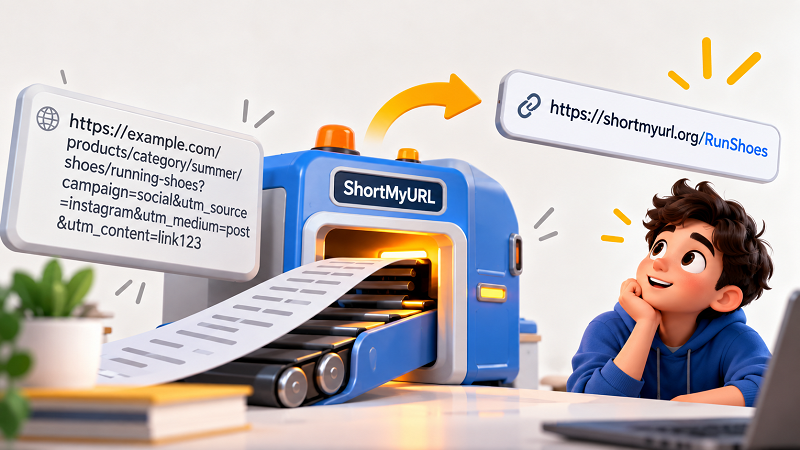
A Short URL Is More Like a Shortcut Than a Replacement
Imagine you regularly visit a friend's apartment. You could give someone the full address, including every detail, or simply tell them, “Go through this shortcut and you'll end up there.”
A shortened link works in a similar way.
The original URL remains the destination. The short URL acts as an intermediary address. When someone clicks it, the shortening service receives the request and redirects the visitor to the original URL.
For example, you might start with something like:
https://example.com/products/category/summer/shoes/running-shoes?campaign=social&utm_source=instagram
After shortening, the visible link might look more like:
https://shortmyurl.org/RunShoes
The second URL isn't replacing the first webpage. It is pointing toward it.
That distinction matters because it explains why shortening a URL can make a link dramatically easier to share without requiring you to change the website itself.
What Happens When Someone Clicks?
Here's the part users rarely see.
A person clicks the short URL. The request reaches the short-link service, which identifies the destination associated with that particular short link. The service then sends the visitor onward to the original URL.
From the user's perspective, the whole thing can happen so quickly that it feels like the short URL simply “opens” the page.
Under the hood, however, there is a redirect happening between the click and the destination.
Think of it as a tiny traffic sign:
Short URL → Redirect → Original URL
That middle step is the entire trick.
And because the visitor doesn't need to manually type the original address, a URL containing a ridiculous number of characters can effectively be represented by a much smaller link.
So, Does the Original URL Disappear?
No.
This is one of the easiest things to misunderstand.
Creating a short link doesn't normally delete, replace or modify the original URL. If you created a short link pointing to:
https://example.com/blog/a-very-long-article-url
the original address still exists independently.
The short link simply gives you another way to reach it.
That means you can think of the two URLs as having different jobs. The original URL identifies the actual resource. The short URL provides a compact entry point to that resource.
This is also why you should always check the destination before sharing a shortened link. A short link may look neat, but what matters at the end of the journey is where it sends people.
What About Everything After the Question Mark?
This is where things get a little more interesting.
Many URLs contain information after a ?. These are called query parameters, and they can be used for different purposes. A website might use them for filtering, searching, identifying a campaign or passing other information to the destination page.
For example:
https://example.com/shoes?color=black&size=10
Those parameters can be meaningful. They may determine what the visitor sees when the page loads.
When shortening a URL, you therefore shouldn't assume that every character in the original link is disposable just because it looks messy.
The important question is not:
“Can I make this URL shorter?”
It is:
“Will the shortened link still send people to the intended destination with the information that destination needs?”
That is a much better question.
Shortening Doesn't Automatically Fix a Bad URL
Here's another misconception worth killing off.
A shortened link can hide an awkward URL, but it doesn't repair the destination itself.
If the original URL leads to a broken page, the short URL isn't going to perform a miracle. You'll simply have a much cleaner-looking link that leads to the same problem.
Likewise, if the original URL points to the wrong product, wrong article or wrong form, shortening it won't correct the mistake.
That's why the workflow should be:
Check the destination → shorten the URL → test the short link → share it.
Not:
Copy whatever URL is in the browser → shorten it → hope for the best.
A five-second check can save you from sending the wrong link to fifty people.
When Turning a URL Into a Short URL Makes Sense
There are plenty of situations where the shorter version is simply easier to work with.
Imagine you're sharing a link verbally. Reading out a long URL filled with slashes, numbers and parameters is painful. A compact link is easier to communicate.
The same thing happens in printed materials. A long URL can become visually distracting, especially when it wraps onto another line. A shorter address is easier to place in a poster, flyer, presentation or other physical material.
Then there are situations where appearance matters. A huge URL can make a message look cluttered before the reader even gets to the important part. A compact link takes up less visual space and keeps attention on the actual message.
None of this changes the destination. It simply changes how people get there.
But Should Every URL Be Shortened?
Not necessarily.
This is where blindly following “shorter is always better” can lead you astray.
Some URLs are already short, clean and easy to understand. If the original address is something like:
example.com/contact
there isn't much of a problem to solve.
There are also situations where showing the original domain and path gives readers useful context. A person may feel more comfortable seeing where a link appears to lead before clicking it.
A short URL is most useful when shortening solves an actual problem: excessive length, awkward sharing, difficult typing or unnecessary visual clutter.
If the original URL is already perfectly usable, there may be little reason to change it.
The Difference Between Short and Useful
This is probably the most important takeaway.
A short URL isn't automatically a good URL.
You can make a link extremely short and still end up with something that is difficult to recognize or remember. On the other hand, a slightly longer short link can sometimes be much easier for humans to understand.
For example, compare:
shortmyurl.org/a7K9x
with:
shortmyurl.org/summer-sale
The first is compact. The second communicates something.
Neither is universally better; the right choice depends on how the link will be used. But it demonstrates an important principle: brevity and usefulness aren't the same thing.
A good short URL should make the sharing experience easier without creating unnecessary confusion.
From URL to Short URL: What Should You Actually Check?
If you're converting a long address into a short one, you don't need a complicated technical checklist. A few practical checks are enough.
First, open the original URL yourself. Make sure it lands on the exact page you intend to share.
Next, look at the URL carefully. If it contains parameters or other information that appears important, don't casually remove anything just because it makes the link look cleaner.
Then create the short version and test it. Click it from the same kind of environment your audience will use if possible.
Finally, look at the short URL as a human would. Is it easy to copy? Does it look trustworthy? If you're using a custom alias, does the wording make sense?
This small routine is far more useful than simply chasing the shortest possible link.
A Cleaner Link Without Rebuilding the Web
The clever thing about URL shortening is that it doesn't require you to rebuild the page, change your website structure or create a second destination.
You're essentially creating a compact doorway to something that already exists.
That is why the process of going from url to short url can be so useful. The original address can remain exactly where it is while the shareable version becomes easier to handle.
And once you understand that, short URLs stop looking like some mysterious piece of web technology. They're simply a practical layer between a person and a destination: small on the outside, doing a very specific job behind the scenes.
The best short link isn't necessarily the one with the fewest characters. It's the one that makes getting to the right place simpler without introducing a new problem along the way.