Your Short Link Gets Clicks. So Why Are People Leaving?
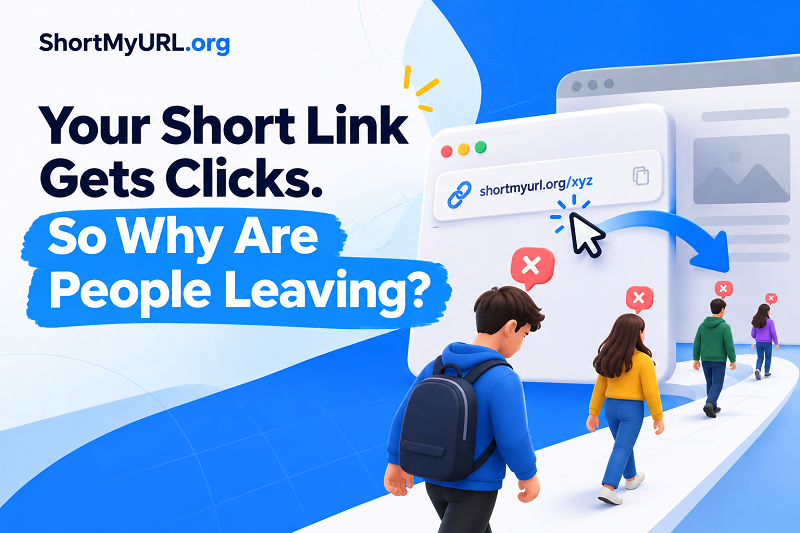
The link works. People are clicking it. Your analytics show traffic. And yet… something still feels wrong. There are plenty of clicks, but not enough signups, purchases, downloads, inquiries, or whatever action you actually wanted visitors to take. When that happens, it is tempting to blame the short link. Maybe people do not trust it. Maybe the redirect is causing problems. Maybe the URL itself is turning visitors away. But before you start creating another short link, take a step back. The link may be doing its job perfectly. The real problem might be what happens after the click.
- A Click Is Only the Beginning
- When the Link Promises One Thing and the Page Delivers Another
- A Correct URL Isn't Always the Right Destination
- Your Short Link Can't Fix a Weak Landing Page
- Follow the Visitor After the Click
- The Same Link Can Perform Differently Everywhere
- Give Visitors a Clear Next Move
- Think Beyond the Short Link
- The Real Goal Isn't More Clicks
A Click Is Only the Beginning
Clicks are easy to celebrate because they give you a clear number. A campaign goes live, the counter starts moving, and suddenly you have evidence that people are paying attention. But a click is not a result. It is simply the beginning of a visitor's journey. Someone can click your link and leave two seconds later. Someone else can arrive, read the page, compare the offer, and complete a purchase. Both count as clicks, but they are obviously not equal.
A more useful way to look at the journey is: Click → Landing Page → First Impression → Engagement → Action. Every stage can either move the visitor forward or give them a reason to disappear. If your short link successfully gets someone to the destination but the destination does not match what they expected, the problem is no longer the link. It is the experience waiting on the other side.
When the Link Promises One Thing and the Page Delivers Another
One of the fastest ways to lose a visitor is to create a gap between the message that earned the click and the page that receives it. Imagine a social post promising, “Get 20% Off Your First Order.” Someone clicks because the offer sounds useful, only to land on a generic homepage where they have to search for the promotion. Maybe the discount is hidden behind another menu. Maybe the campaign banner is buried halfway down the page. Maybe the promotion has already expired.
The visitor did not necessarily lose interest in your brand. You simply made them work too hard to find the thing they were promised. The same problem appears in content campaigns, email marketing, product promotions, and paid advertising. A post can promise a specific guide while sending people to a general blog page. An email can highlight one product while directing visitors to an entire catalog. The URL can be completely functional while the user experience is completely wrong.
A Correct URL Isn't Always the Right Destination
There is an important difference between sending someone to a page that is technically correct and sending them to the page that makes the most sense. Suppose you are promoting a new product. Sending visitors to the product category might work, but if they have to browse through ten other products before finding the one you mentioned, you have introduced unnecessary friction. If the campaign is about a specific offer, take people directly to that offer. If you are promoting a registration form, make the form easy to reach. If your message promises a downloadable resource, the resource should be obvious as soon as the page opens.
The best destination is not simply the page where the information exists. It is the page that naturally continues the conversation that started with the click. A good short link can make sharing easier, but the destination needs to finish the job.
Your Short Link Can't Fix a Weak Landing Page
This is where expectations around URL shortening can sometimes get a little unrealistic. A cleaner, more memorable link can reduce friction before someone visits your website. It can be easier to share in a message, easier to print on marketing material, and easier to recognize in a campaign. For example, turning a complicated destination into a url to short url can give your audience a much cleaner address to work with.
But once the visitor arrives, the short link has done its job. It cannot make a slow website load faster. It cannot rewrite a confusing headline. It cannot make a weak offer more compelling or move a hidden button to the right place. It cannot make a desktop-only page comfortable to use on a phone. Most importantly, it cannot convince someone to take an action they do not understand.
That is why link performance should never be judged by the link alone. You need to look at the entire experience surrounding it.
Follow the Visitor After the Click
Instead of asking only how many people clicked, start asking what happened next. Did the link take visitors exactly where you intended? Did the page immediately confirm that they were in the right place? Did the content match the reason they clicked? Was the page easy to use on a phone? Was the next action obvious?
These questions become especially important when the same link is shared in different environments. Someone arriving from an email may already know your brand and need very little explanation. Someone discovering your brand through social media may need more context before they are ready to act. Someone scanning a QR code from a printed poster may have only a few seconds of attention. The destination might be identical, but the mindset of the visitor can be completely different.
The Same Link Can Perform Differently Everywhere
Imagine promoting the same offer through an email, a social post, and a printed flyer. The email generates 300 clicks, the social post generates 1,200, and the flyer produces only 80. At first glance, social media looks like the obvious winner. But what if 10% of the email visitors complete the desired action while only 1% of the social visitors do? Suddenly, the smaller traffic source looks much more interesting.
This is why clicks should be treated as one signal rather than the final score. Different channels create different expectations, and those expectations affect what people do after they arrive. A landing page that works beautifully for an audience already familiar with your brand may perform poorly when shown to people who have never heard of you. The same destination can produce completely different results depending on the context surrounding the link.
Give Visitors a Clear Next Move
Once someone reaches your page, make the next step obvious. Do you want them to buy something, sign up, download a file, book a call, read an article, or simply learn more? Whatever the goal is, visitors should not need detective skills to figure it out.
This does not mean every page needs to scream “BUY NOW!” A good user experience can be subtle. If the purpose of the page is education, guide the reader toward the next useful piece of information. If it is a product page, make the purchasing path easy to understand. If it is a signup page, remove unnecessary distractions. The principle is simple: the action you want people to take should feel like the natural next step rather than another puzzle they have to solve.
Think Beyond the Short Link
It is easy to think of a short URL as the main event because it is the visible piece of the journey. In reality, it is better viewed as the entrance. Its job is to make the journey easier to start. The landing page, offer, content, and overall user experience determine whether visitors want to continue.
That distinction changes the questions you should ask when evaluating a campaign. Instead of only asking, “How many people clicked my short link?” ask, “What happened after they clicked?” Did they stay? Did they engage? Did they find what they expected? Did they complete the action? If the answer is no, creating an even shorter URL probably is not going to solve the problem.
The Real Goal Isn't More Clicks
A short link that generates 10,000 clicks but sends people to a confusing or irrelevant page is not automatically more successful than one that generates 1,000 highly relevant visitors who actually take action. More traffic sounds impressive, but traffic without intent can become nothing more than a vanity metric.
The real goal is to create a smooth path from attention to action. Your short link is one part of that path. Make it clean, make it useful, make sure it leads somewhere relevant, and then pay attention to what happens after the click. If visitors keep disappearing, don't automatically blame the link. Follow the journey, find the point where people lose interest, and fix the experience there.