The One-Link Problem: Why Your Social Media Bio Is Losing Visitors
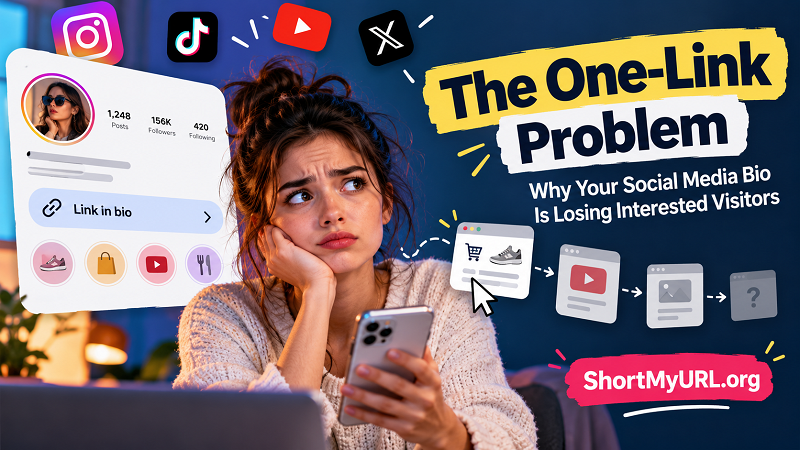
Imagine this: You spend hours creating a video, editing the perfect caption, choosing the right thumbnail, and finally publishing a post that gets people interested in your product. Someone watches it, likes what they see, and decides to learn more. Then comes the frustrating part. They visit your profile, click the link in your bio, land on a generic page, search through several options, and eventually give up.
- Social Media Gave You One Link. Your Business Needs Ten.
- What Happens Between Interest and the Final Click?
- Having Links Isn't the Same as Building a Navigation Experience
- One Link Should Have a Job, Not Just a Destination
- Making Every Shared Link Easier to Act On
- Your Audience Shouldn't Have to Search for What You Promised
The content did its job. It created interest. But the journey from interest to action fell apart somewhere between the first click and the final destination.
This is a surprisingly common problem for creators, influencers, and businesses operating across social media platforms. They invest heavily in getting attention but often overlook what happens after someone becomes interested. And when your entire social media presence depends on a single bio link, that small detail can become a much bigger marketing problem than you think.
Social Media Gave You One Link. Your Business Needs Ten.
Modern social media marketing rarely revolves around a single destination. A creator might publish a new YouTube video, promote an affiliate product, announce a collaboration, share a discount code, and direct followers to a newsletter—all within the same week. A business might have new product launches, seasonal promotions, blog articles, customer support pages, and ongoing advertising campaigns competing for attention.
Unfortunately, platforms such as Instagram and TikTok have traditionally offered limited opportunities to place prominent external links within profile interfaces. Even when multiple links are supported, the available space and presentation still require users to make a choice.
That's where the conflict begins. Your business operates with multiple priorities, but your audience needs a clear path to the specific information that caught their attention.
Think about a fitness creator who publishes three different types of content: workout tutorials, nutrition advice, and equipment reviews. Someone watching a video about resistance bands probably wants to find the recommended equipment, not browse an unrelated collection of recipes and training programs. Sending every visitor to the same generic destination creates unnecessary friction.
The problem isn't necessarily the number of links you have. It's whether those links help people find what they came for.
What Happens Between Interest and the Final Click?
A social media conversion rarely happens in one uninterrupted moment. People discover content while scrolling, become curious, and decide whether something deserves their attention. Every additional step creates another opportunity for that interest to disappear.
Consider a simple scenario. A small business publishes a post announcing a limited-time offer. The caption tells followers to visit the link in its bio. A potential customer follows the instruction but arrives at a page containing eight different destinations. The promotion is there, but it sits between an About Us page, an old campaign, several social profiles, and a collection of unrelated resources.
Nothing is technically broken. The customer can still find the offer. But the experience asks them to do more work than necessary.
There are several reasons this becomes a problem.
Too many choices create unnecessary hesitation. A long list of destinations without clear priorities forces visitors to evaluate every option. When the purpose of a link isn't immediately obvious, people may simply leave rather than investigate.
The original context disappears. Someone clicking from a product demonstration expects to reach information about that product. If they land on a general homepage, they must reconstruct the journey themselves. That's a poor trade-off when their original interest was already established.
Campaigns change faster than profile links. A creator might promote a product on Monday and launch a new collaboration on Friday. If the bio still highlights last week's campaign, new visitors may encounter outdated priorities. Even worse, an old destination might no longer be relevant.
Mobile experiences leave little room for friction. Most social media discovery happens on mobile devices. Switching between applications, waiting for pages to load, and navigating unfamiliar layouts can make an otherwise simple journey feel unnecessarily complicated.
Each issue might seem minor on its own. Together, they create a frustrating experience that can undermine the effectiveness of otherwise excellent content.
Having Links Isn't the Same as Building a Navigation Experience
A collection of clickable destinations is not automatically a useful navigation system. The difference comes down to organization, relevance, and the expectations people bring when they click.
Imagine two creators with identical audiences and similar content strategies.
The first creator uses a profile page containing every destination they have ever promoted. The latest video, an old discount campaign, affiliate products, personal website, newsletter, and contact information all appear together. Visitors must decide where to go.
The second creator organizes destinations around what the audience is most likely to need. Current campaigns receive priority, popular resources are easy to identify, and less important destinations remain accessible without dominating the page.
Both creators technically provide the same information. However, the second creates a more intentional experience because the structure reflects audience behavior rather than the creator's publishing history.
This distinction matters for businesses, too. A company promoting a new product should not force potential customers to search through its entire corporate website before finding the product page. A restaurant announcing a special menu should make that menu easy to access instead of directing everyone to a homepage where they must navigate several sections.
Good navigation doesn't mean removing every choice. It means making the most relevant choice obvious.
One Link Should Have a Job, Not Just a Destination
Before placing a link in your social media bio, consider what you actually want visitors to accomplish. A destination should serve a clear purpose, not simply occupy available space.
For example, a product launch campaign might prioritize a dedicated product page. A content creator trying to grow an email audience might give newsletter registration the most prominent position. An influencer promoting several affiliate products might organize recommendations into recognizable categories.
The best destination depends on the audience's expectations and the objective of the campaign.
This is also where link management becomes useful. Instead of constantly sharing complicated website addresses, creators and businesses can use a service such as short my url to create cleaner, more manageable links for their campaigns and social profiles. Custom aliases can make destinations easier to recognize, while QR codes provide another way to connect offline audiences with online resources.
However, there's an important distinction: a shorter URL does not automatically create a better user experience. If the destination is irrelevant, confusing, or outdated, changing the appearance of the link won't solve the underlying problem. The destination still needs to deliver what the original content promised.
Think of a link as a bridge between two moments: the moment someone becomes interested and the moment they receive the information they expected. Your job is to make that bridge as direct and dependable as possible.
Making Every Shared Link Easier to Act On
Improving your social media link strategy doesn't require an elaborate marketing operation. It starts with paying attention to the relationship between your content, your audience, and the destination you provide.
Match the destination to the content. If a post introduces a specific product, direct interested visitors to that product rather than making them search through your entire website. If you're promoting an article, send people to the article itself. The closer the destination matches the original promise, the more natural the experience becomes.
Give your most important destination priority. Not every link deserves equal visibility. If you're running a campaign, make the campaign destination easy to find. If you're promoting a new product, don't bury it beneath outdated announcements and unrelated resources.
Use descriptions that explain what happens next. Labels such as "Shop the New Collection," "Watch the Latest Video," or "Download the Free Guide" communicate more than generic descriptions such as "Click Here." Visitors should understand the purpose of a destination before opening it.
Review your links regularly. A profile that worked perfectly three months ago might now contain expired promotions, outdated information, or destinations that no longer support your current objectives. Treat your bio link as an active part of your marketing strategy, not a setup task you complete once and forget.
Measure what happens after the click. Traffic numbers alone don't tell the whole story. Look at which destinations attract attention, whether visitors continue browsing, and whether the intended action actually happens. When possible, use analytics and campaign tracking to understand which channels and placements generate meaningful results.
Most importantly, avoid adding unnecessary steps just because a platform or marketing tool makes them available. More links, more buttons, and more pages do not automatically create a better experience. Sometimes the most effective improvement is simply removing one unnecessary decision.
Your Audience Shouldn't Have to Search for What You Promised
Creating content that attracts attention is difficult. Turning that attention into meaningful engagement is another challenge entirely. Yet many brands and creators spend most of their time optimizing the first part of the journey while leaving the second almost entirely to chance.
Your social media bio might contain only one prominent link, but that doesn't mean the experience behind it should be an afterthought. Every destination communicates something about your brand: how organized you are, how well you understand your audience, and how much effort you're willing to put into making their experience easier.
A visitor who clicks on your link has already shown some level of interest. Don't make them work unnecessarily to find what you promised.
The goal isn't to give people more places to click. It's to help them reach the right place with less confusion. And in a crowded digital environment where attention is constantly competing with everything else on the screen, that small difference can matter.